Your Gut Is Shaping How You Think. Most of Us Are Starving It
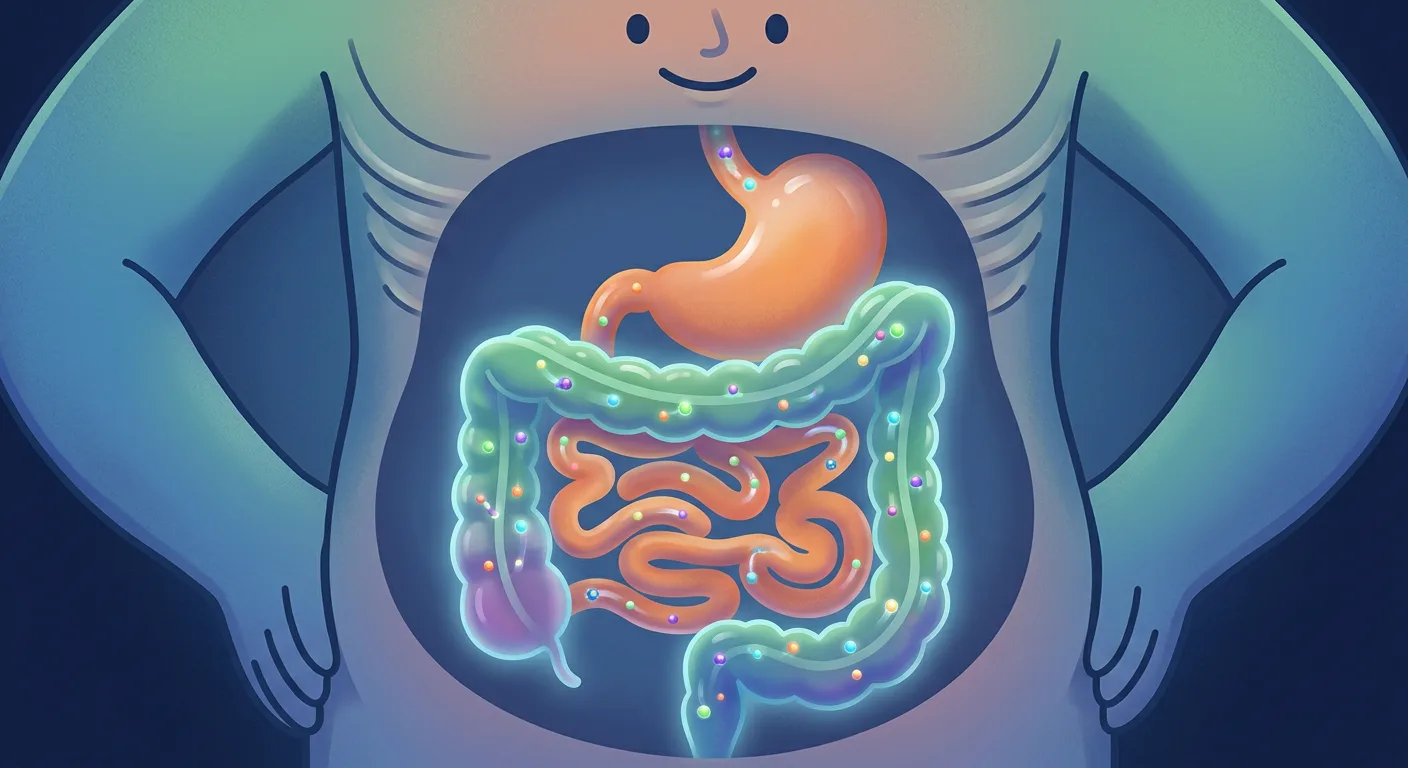
You probably think of your brain as the boss. It decides, remembers, focuses and feels. But there's a second system in your body sending it messages every minute of the day, and what you feed that system may be shaping how clearly you think.
That system is your gut. And most of us are running it on empty.
Your gut is not just a food tube
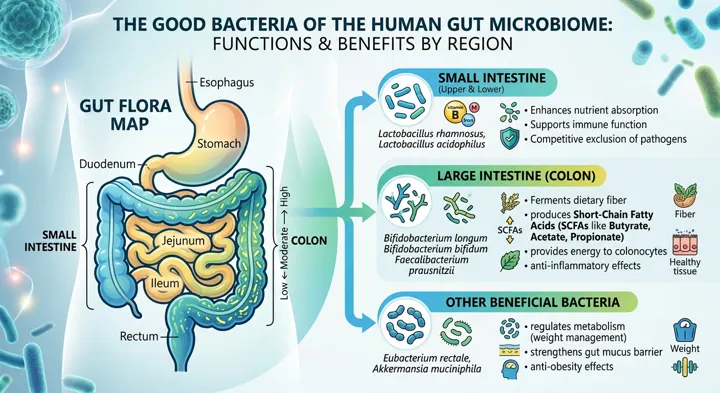
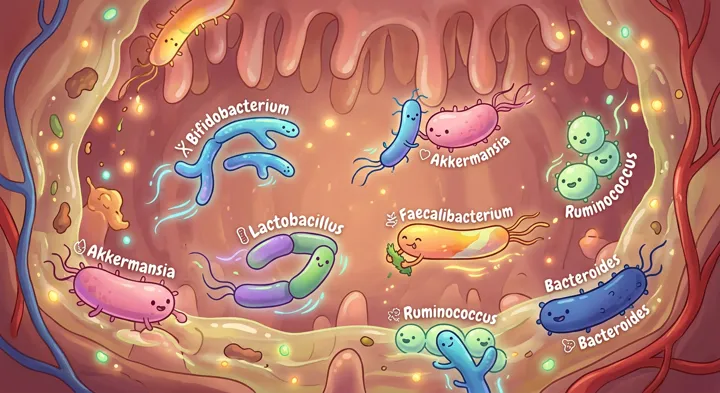
Your gut is lined with around 500 million nerve cells, a network so large it's nicknamed "the second brain". It's also home to trillions of bacteria, the gut microbiome, that break down the fibre you can't digest yourself.
These two things, the nerves and the bacteria, are in constant contact with your head. The main line is the vagus nerve, and most of its fibres carry messages up from the gut to the brain, not down (Bonaz et al., 2018). Your gut isn't waiting for instructions. It's reporting in, all day long. (For the full picture, read how your gut and brain talk to each other.)
What this means for how you think
Here's where it gets interesting. When gut bacteria ferment fibre, they produce compounds such as short-chain fatty acids. Some bacteria also influence chemical messengers, and gut signals travel to the brain through nerves, the immune system and the bloodstream.
Scientists are now asking a bold question: could feeding your gut bacteria help your brain work better?
One of the most talked-about studies came from King's College London in 2024. Researchers gave 36 pairs of twins aged 60 and over either a daily prebiotic fibre powder (inulin or FOS) or a placebo for 12 weeks. The twins who got the fibre scored better on a memory and learning test, the same type of test used to help spot early signs of Alzheimer's, and had more Bifidobacterium, a friendly gut bacterium (ScienceAlert; Nature Communications, 2024).
Because each twin was compared with their own sibling, the result is harder to explain away by genes or upbringing. That's what made it headline news.
Before you rush out for supplements
It's an exciting result, and it should make you pay attention to your gut. But it's not proof that a powder will sharpen your mind.
- The study was small, and most participants were women over 60.
- The researchers themselves say the next step is to test it in larger groups over longer periods.
- A 2026 research review concluded that the gut-cognition link in humans is promising but not yet proven to be cause and effect. Much of the strongest evidence still comes from animal studies (Raber & Sharpton, 2026).
So here's the honest takeaway: we don't need to wait for perfect proof to act. The habits that feed your gut are the same ones already recommended for your heart, your weight and your energy. There's no downside to starting now.
Signs your gut might be asking for attention
These are common, everyday signals worth noticing. They don't mean anything is wrong on their own, but they're a nudge to look at what you're eating:
- Your meals are mostly white bread, takeaway and packaged snacks
- You rarely eat legumes, wholegrains, nuts or seeds
- You often feel sluggish, bloated or "heavy" after meals
- You lean on sugar and caffeine to get through the afternoon
- You eat the same handful of foods every week
If you have ongoing gut symptoms, problems with memory or concentration, or changes in mood, please talk to your GP. Those deserve a proper check, not a food fix.
6 ways to feed your gut, and back your brain, starting today
- Add one fibre food to every meal. Oats at breakfast, a can of chickpeas in lunch, an extra vegetable at dinner. Australian guidelines suggest around 25 g a day for women and 30 g for men (NHMRC).
- Aim for variety. Different plants feed different bacteria. Try to add one new fruit, vegetable, grain or legume each week.
- Swap one sugary drink a day. Try a homemade prebiotic soda or chia lemon water instead.
- Include fermented foods. Yoghurt with live cultures, kefir, kimchi or sauerkraut a few times a week.
- Go slow. Increase fibre over a couple of weeks and drink plenty of water, or you'll swap brain fog for bloating.
- Protect your sleep and stress levels. Your gut and brain talk both ways. Read how stress and sleep affect digestion.
The bottom line
Your brain doesn't work alone. Every meal sends signals through a system that's been quietly influencing how you feel and think all along. Science is still mapping exactly how much it matters for memory and focus, but the first step is simple, cheap and good for you either way: feed your gut properly.
Not sure where to start? Our easy gut-friendly recipes start with a two-minute drink. And if you've got a question about your own gut habits, ask us.
Sources
- Fayet-Moore et al. (2018). Dietary Fibre Intake in Australia. Paper I. Nutrients
- Ni Lochlainn et al. (2024). Effect of gut microbiome modulation on muscle function and cognition: the PROMOTe randomised controlled trial. Nature Communications
- ScienceAlert: A cheap daily supplement appears to boost brain function in older adults
- Raber & Sharpton (2026). Diet, gut microbiome, and cognition in neurodegeneration. Frontiers in Aging Neuroscience
- Bonaz, Bazin & Pellissier (2018). The Vagus Nerve at the Interface of the Microbiota-Gut-Brain Axis. Frontiers in Neuroscience
- NHMRC Nutrient Reference Values: Dietary fibre